
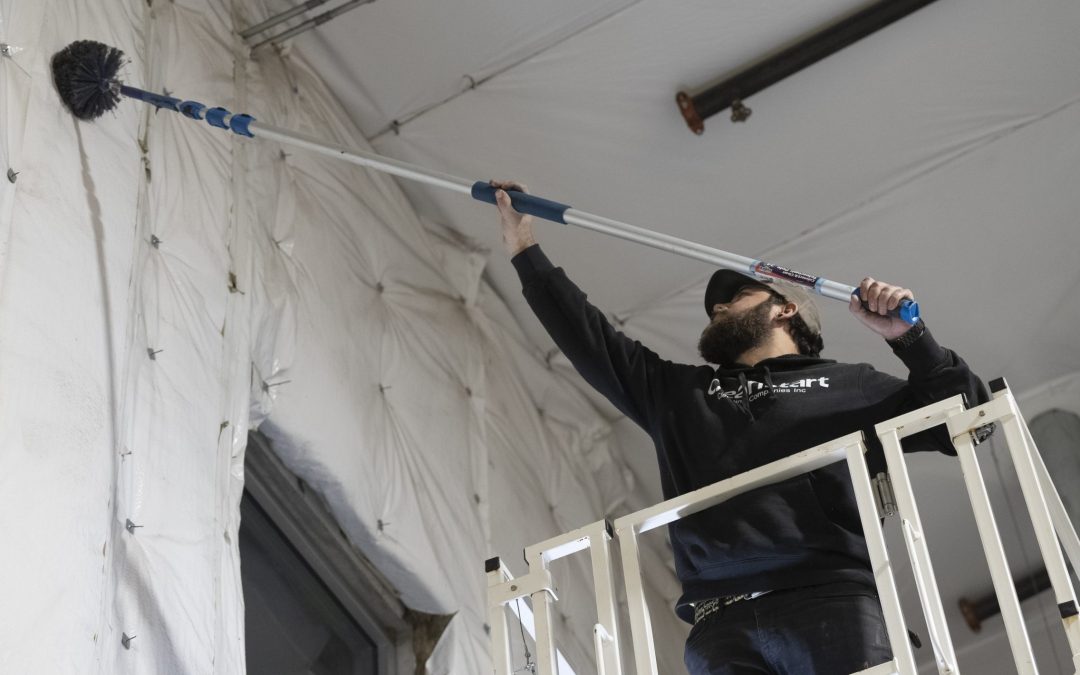
A commercial facility can look spotless at eye level while an entirely different story is unfolding overhead. Dust, lint, cobwebs, and airborne debris naturally accumulate on exposed ductwork, pipes, rafters, light fixtures, vents, beams, ledges, and other elevated surfaces.
Because these areas are difficult to see and even harder to reach, they can go months or even years without receiving the same attention as floors, desks, restrooms, and other frequently cleaned surfaces. That is where professional high-dusting comes in.
High-dusting services are an important but often overlooked part of comprehensive commercial cleaning. By addressing areas that routine janitorial cleaning may miss, businesses can improve the overall cleanliness of their facilities, reduce accumulated dust and debris, and maintain a cleaner environment from top to bottom.
At Cleanstart, high-dusting is one of the specialized commercial cleaning services we provide to businesses and facilities throughout the Greater Puget Sound region. Whether it is an office with exposed ceilings, a busy warehouse, a retail store, or a large industrial facility, keeping elevated surfaces clean can make a noticeable difference in the overall condition of the building.
What Is High-Dusting?
High-dusting is the process of removing dust, cobwebs, lint, and other debris from elevated surfaces that are difficult or unsafe to reach during routine cleaning. While standard janitorial services typically focus on accessible surfaces, high-dusting addresses areas above normal reach, including:
- Exposed beams and rafters
- Pipes and conduit
- HVAC ductwork
- Air vents and grilles
- Light fixtures
- Ceiling fans
- Structural supports
- Ledges and high shelving
- Suspended signs and fixtures
- Tops of cabinets and equipment
- Other elevated architectural features and surfaces
High-dusting does not necessarily mean cleaning something 30 feet in the air. It can include any surface that cannot be safely or effectively cleaned from floor level during routine janitorial service.
In modern commercial buildings, high-dusting has become especially important because exposed ceilings, ductwork, pipes, and structural elements are increasingly common design features. When these areas collect dust, the buildup can become visible to employees, customers, and visitors.

Why Does Dust Accumulate in Hard-to-Reach Areas?
Dust is constantly moving through commercial buildings. Foot traffic, ventilation systems, open doors, manufacturing processes, deliveries, construction activity, textiles, paper products, and everyday business operations all introduce or circulate particles throughout a facility.
Eventually, those particles settle. Horizontal overhead surfaces such as ductwork, beams, pipes, light fixtures, and ledges are natural collection points. Because these surfaces are not cleaned as frequently as floors, counters, desks, and other accessible areas, small amounts of dust can gradually turn into noticeable buildup.
Air movement can also disturb accumulated dust. HVAC systems, ceiling fans, machinery, vibration, and normal building activity may cause particles to become airborne again, only to settle elsewhere eventually. This is why a facility may get dusty again shortly after routine cleaning. Sometimes the source of the problem isn’t at eye level. It’s overhead.
Why High-Dusting Is Important for Commercial Facilities
High-dusting is more than making difficult-to-reach areas look better. It contributes to the overall cleanliness, appearance, and maintenance of the entire facility.
Improve Indoor Air Quality
Dust doesn’t necessarily stay where it lands. Air movement from HVAC systems, fans, equipment, and everyday activity can disturb accumulated particles and send them back into the surrounding environment. Those particles may then circulate through the building or settle onto other surfaces.
Regularly removing excess overhead dust helps reduce particulate matter accumulation in the facility and supports broader efforts to maintain a cleaner indoor environment. High-dusting is not a replacement for proper ventilation, HVAC maintenance, or air filtration, but it can be an important part of a comprehensive facility cleaning strategy.
Keep Lower Surfaces Cleaner
Imagine thoroughly cleaning every desk, counter, shelf, and floor in a facility while leaving months of accumulated dust sitting on the ductwork and rafters overhead. Eventually, some of that debris will make its way back down.
Removing dust at the source helps prevent overhead buildup from continually settling onto lower surfaces. This can make routine janitorial cleaning more effective and help facilities maintain their appearance between cleanings. It is also why professional deep cleaning often follows a simple principle: work from the top down.
Maintain a Cleaner, More Professional Appearance
Customers and employees may not inspect every ceiling beam when they walk into a building, but heavy dust, hanging cobwebs, and dirty fixtures can still affect how a space feels. This is particularly noticeable in buildings with exposed ceilings, where ductwork, pipes, beams, and lighting are intentionally part of the interior design.
Restaurants, retail stores, offices, fitness centers, showrooms, event spaces, and other customer-facing facilities can all benefit from keeping overhead surfaces as clean and well-maintained as the rest of the building. A truly clean facility should look clean from floor to ceiling.
Protect Equipment and Building Systems
Dust can accumulate around vents, lighting, mechanical components, electronics, shelving, and other equipment. While high-dusting isn’t a substitute for professional HVAC or equipment maintenance, controlling excessive dust buildup can be part of a good preventive facility maintenance program.
Regular cleaning also allows facility teams to monitor areas that may otherwise receive little attention.
Address Safety and Sanitation Concerns
Allowing excessive dust and debris to accumulate isn’t a good practice in any commercial environment, but certain facilities require even greater attention to cleanliness. Healthcare environments, schools, food-related businesses, warehouses, manufacturing facilities, and industrial properties may have different sanitation, operational, or safety considerations depending on how the building is used.
Some industrial environments also produce combustible dust, which can present serious fire and explosion hazards under specific conditions. Combustible dust requires specialized evaluation and controls and should not be treated as ordinary commercial dust.
For most businesses, the goal of high-dusting is much simpler: prevent excessive accumulation and maintain a cleaner, safer, and better-kept facility.
What Types of Facilities Benefit From Professional High-Dusting?
Almost any commercial property can accumulate dust in elevated areas, but some facilities are particularly well-suited for scheduled high-dusting services.
Warehouses and Distribution Centers
Warehouses often feature high ceilings, exposed structural components, large shelving systems, loading areas, and significant airflow. Dust and debris can accumulate on rafters, pipes, ductwork, lighting, ledges, and other overhead surfaces that are difficult to reach during routine warehouse cleaning.
Periodic high-dusting can be incorporated into a broader warehouse cleaning program to address these areas before buildup becomes excessive.
Manufacturing and Industrial Facilities
Manufacturing processes can generate additional dust and particulate matter depending on the products, materials, and equipment used within the facility. Production areas may also contain extensive overhead piping, conduit, structural supports, ventilation systems, and equipment, creating additional areas for debris to collect.
Because every industrial environment is different, high-dust methods and schedules should be tailored to the specific conditions within the facility.
Retail Stores and Showrooms
Retail stores increasingly feature open ceilings with visible ductwork, pipes, lighting, and structural elements. The design may look great when everything is clean. It becomes much less attractive when those same surfaces are covered in dust and cobwebs.
Scheduled high-dusting helps maintain the polished appearance customers expect while complementing routine floor, restroom, window, and general cleaning services.
Offices and Commercial Buildings
Offices aren’t immune to overhead dust. Exposed ceilings, high ledges, light fixtures, vents, ceiling fans, decorative elements, and the tops of tall cabinets can all collect debris over time. High-dusting can be incorporated into periodic deep cleaning, so areas outside the scope of everyday office cleaning still receive attention.
Schools and Educational Facilities
Schools often contain large or high-ceiling areas that can be difficult to maintain through routine janitorial cleaning alone. Gymnasiums, auditoriums, cafeterias, libraries, common areas, and multipurpose spaces may contain elevated fixtures, beams, ductwork, vents, and ledges where dust can accumulate.
Periodic high-dusting can complement routine school cleaning and help maintain a cleaner environment throughout the facility.
Healthcare and Medical Facilities
Dust control is especially important in healthcare environments, where comprehensive environmental cleaning programs are essential. High ledges, vents, fixtures, and other elevated surfaces can be incorporated into scheduled cleaning protocols to prevent unnecessary accumulation.
High-dusting should always be performed in accordance with the facility’s requirements and in a manner that avoids unnecessarily dispersing dust into occupied areas.
Restaurants and Commercial Kitchens
Restaurants may have elevated lighting, exposed ductwork, beams, decorative fixtures, vents, and other surfaces that require periodic attention. Commercial kitchens present additional challenges because airborne grease can combine with dust and other particles, creating buildup that may require cleaning methods beyond traditional high-dusting.
The cleaning method should always match the type of buildup and the environment being cleaned.
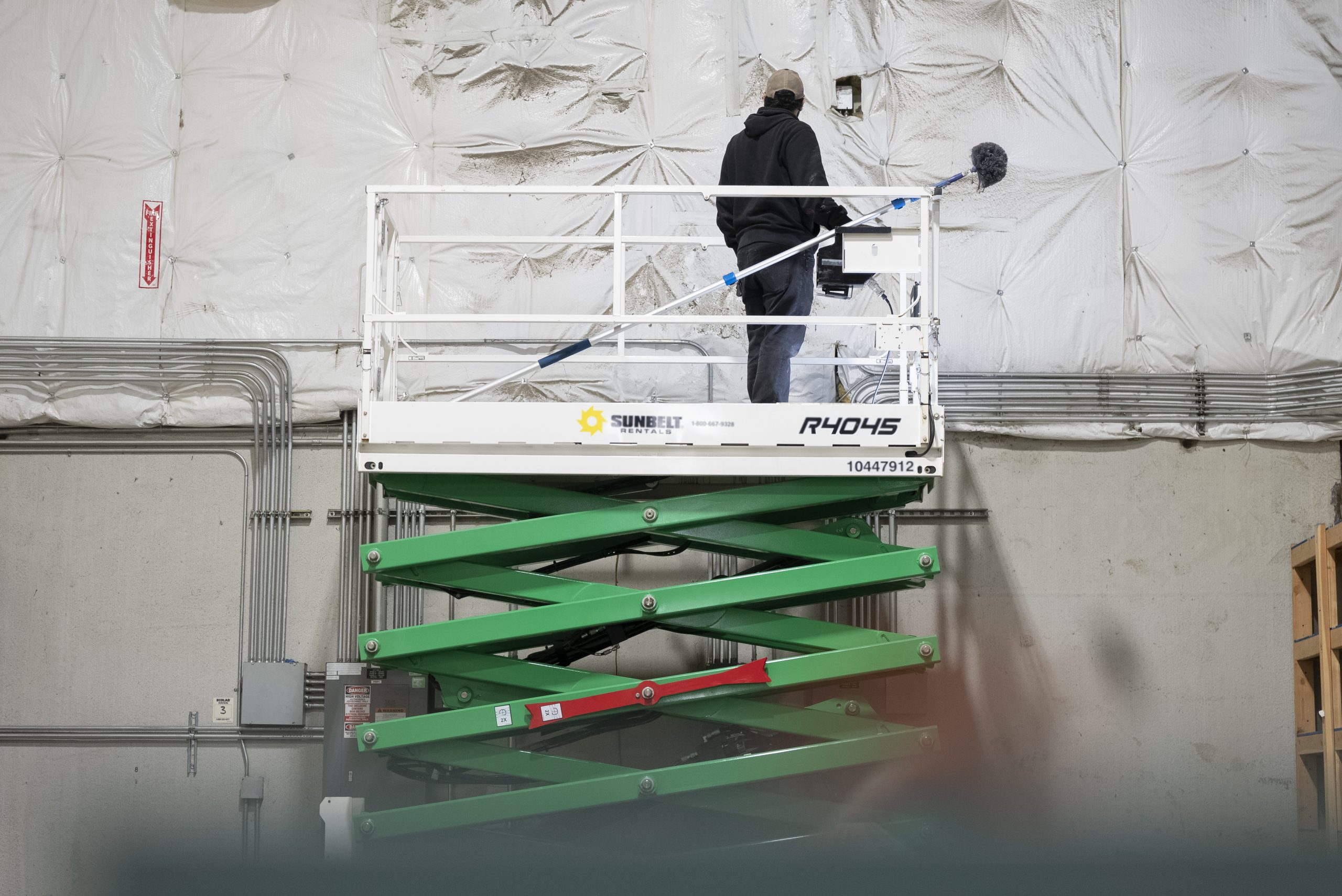
How Commercial High-Dusting is Performed
There is no single method that works for every building. Professional high-dusting begins by evaluating the facility, including ceiling height, surface types, accessibility, the amount and type of buildup, nearby equipment, and whether the space will be occupied during cleaning.
Depending on the environment, professional cleaners may use:
- Extension dusting systems
- Microfiber tools
- HEPA-filtered vacuums
- Specialized brushes and attachments
- Lifts or other appropriate elevated-access equipment
One of the most important considerations is controlling the dust as it is removed. Simply knocking accumulated dust from a ceiling beam onto the desks, merchandise, machinery, or floors below doesn’t solve much.
Whenever possible, professional high-dusting methods should focus on capturing and removing debris while minimizing unnecessary airborne dust. The surrounding area may also need to be protected or cleaned afterward as part of a complete top-down cleaning process.
Why High-Dusting Should Be Left to Trained Professionals
Cleaning a desk and cleaning ductwork 20 feet above the floor are very different jobs. Working at height introduces additional considerations, including access equipment, nearby electrical components, overhead fixtures, falling debris, people working below, and the protection of surrounding equipment and property.
Commercial facilities may also contain sensitive equipment, active work areas, merchandise, machinery, or other obstacles that need to be considered before work begins. Professional commercial cleaners like Cleanstart have the equipment and experience to evaluate these conditions and determine an appropriate cleaning approach.
For businesses, bringing in a professional team also eliminates the temptation for employees to climb ladders or improvise ways to reach surfaces that weren’t designed to be cleaned without specialized equipment.
How Often Should Commercial High-Dusting Be Done?
There isn’t a universal high-dusting schedule that works for every commercial building. Some facilities naturally accumulate dust much faster than others.
The appropriate frequency can depend on:
- Building use
- Ceiling height and design
- HVAC operation
- Foot traffic
- Manufacturing or production activity
- Loading docks and frequently opened exterior doors
- Indoor air quality requirements
- Amount of existing dust
- Routine janitorial schedule
- Seasonal conditions
A busy warehouse or industrial facility, for example, may require more frequent dusting than a small professional office. Rather than waiting until thick layers of dust or cobwebs become visible, businesses can incorporate high-dusting into a periodic preventive cleaning schedule.
Depending on the facility, that could mean several times per year, once a year, or as conditions require. A professional facility walkthrough can help determine which areas need attention and how frequently they should be serviced.
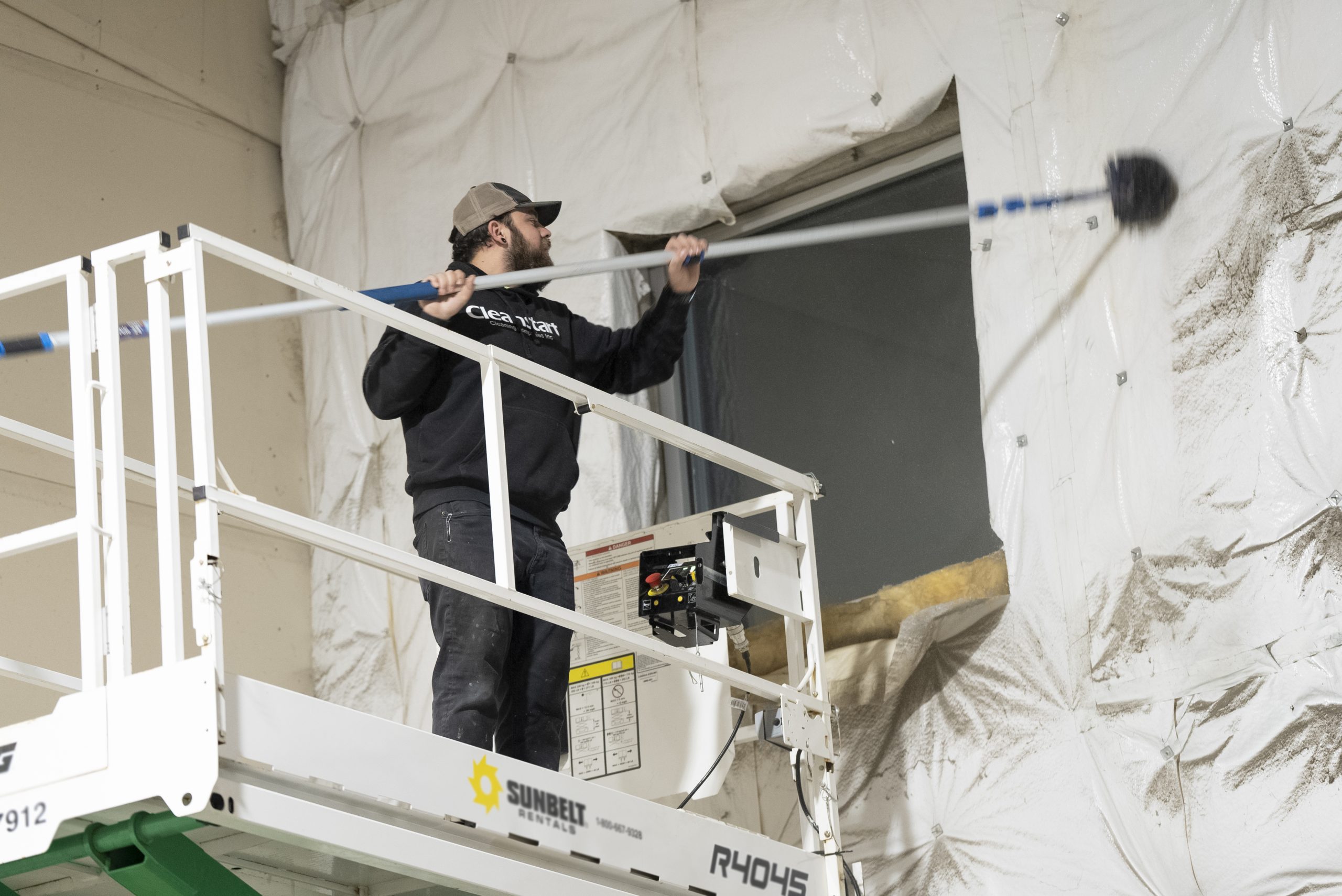
Professional High-Dusting Services Throughout the Greater Puget Sound
The areas you don’t see every day shouldn’t be the areas that never get cleaned. At Cleanstart, we provide professional high-dusting services for commercial and industrial facilities throughout the Greater Puget Sound region.
Our team works with offices, warehouses, retail properties, healthcare facilities, schools, industrial buildings, and other commercial environments to address difficult-to-reach areas as part of a comprehensive facility cleaning program.
Since every building is different, we tailor our approach to the facility, its operations, and the surfaces that need attention. Whether high-dusting is needed as a periodic standalone service, part of a deep cleaning project, or incorporated into an ongoing commercial cleaning program, our goal is to help keep your facility clean from floor to ceiling.
If you look up and notice dust collecting on beams, ductwork, pipes, vents, light fixtures, or other elevated surfaces, it may be time to go beyond routine cleaning and schedule professional high-dusting services.
Contact Cleanstart today to request a free quote or schedule a facility walkthrough for professional high-dusting services throughout the Greater Puget Sound region.
Frequently Asked Questions About High-Dusting
What does high-dusting refer to in commercial cleaning?
High-dusting is a specialized cleaning service that removes accumulated dust, cobwebs, lint, and debris from elevated and hard-to-reach surfaces. These may include exposed ductwork, pipes, beams, rafters, vents, light fixtures, ledges, structural supports, and other areas that are typically beyond the reach of routine janitorial cleaning.
How often should commercial high-dusting be done?
The ideal frequency depends on the type of facility, ceiling height, HVAC operation, foot traffic, building use, and dust accumulation rate. Some warehouses, industrial facilities, and high-traffic commercial properties may benefit from high-dusting several times per year, while other buildings may only require it annually or as needed. A facility walkthrough can help determine an appropriate cleaning schedule.
What areas are included in high-dusting services?
High-dusting can include exposed beams, rafters, pipes, conduit, HVAC ductwork, vents, grilles, light fixtures, ceiling fans, high ledges, structural supports, suspended fixtures, and the tops of cabinets or equipment. The exact areas cleaned depend on the facility and accessibility of the surfaces.
Why is high-dusting important?
Dust that accumulates overhead can be disturbed by airflow, HVAC systems, equipment, and everyday building activity, allowing particles to become airborne or settle onto surfaces below. Regular high-dusting helps control this buildup, supports overall facility cleanliness, and prevents difficult-to-reach areas from being overlooked.
Which types of businesses need high-dusting services?
High-dusting can benefit many types of commercial and industrial properties, including warehouses, distribution centers, manufacturing facilities, offices, retail stores, schools, healthcare facilities, fitness centers, restaurants, showrooms, and buildings with exposed ceilings.
Can high-dusting help with indoor air quality?
High-dusting can support a facility’s broader indoor air quality efforts by removing accumulated dust and particulate matter from elevated surfaces before it can be recirculated or settle elsewhere. However, high-dusting should complement rather than replace proper HVAC maintenance, ventilation, filtration, and routine cleaning.
How do professionals clean areas with very high ceilings?
Professional commercial cleaners may use extension dusting systems, microfiber tools, HEPA-filtered vacuums, specialized attachments, and appropriate elevated-access equipment, depending on the building’s height and configuration. The goal is to safely remove accumulated debris while minimizing unnecessary dust dispersion throughout the facility.
Can high-dusting be added to regular commercial cleaning services?
Yes. High-dusting can be scheduled periodically as part of an ongoing commercial cleaning program or performed as a standalone deep cleaning service. Combining routine janitorial cleaning with periodic high-dusting helps maintain areas from floor level to the ceiling.
Where does Cleanstart provide commercial high-dusting services?
Yes. Cleanstart provides professional high-dusting and commercial cleaning services for businesses and facilities throughout the Greater Puget Sound region. Services can be customized based on the facility’s size, ceiling height, building use, accessibility, and cleaning requirements.