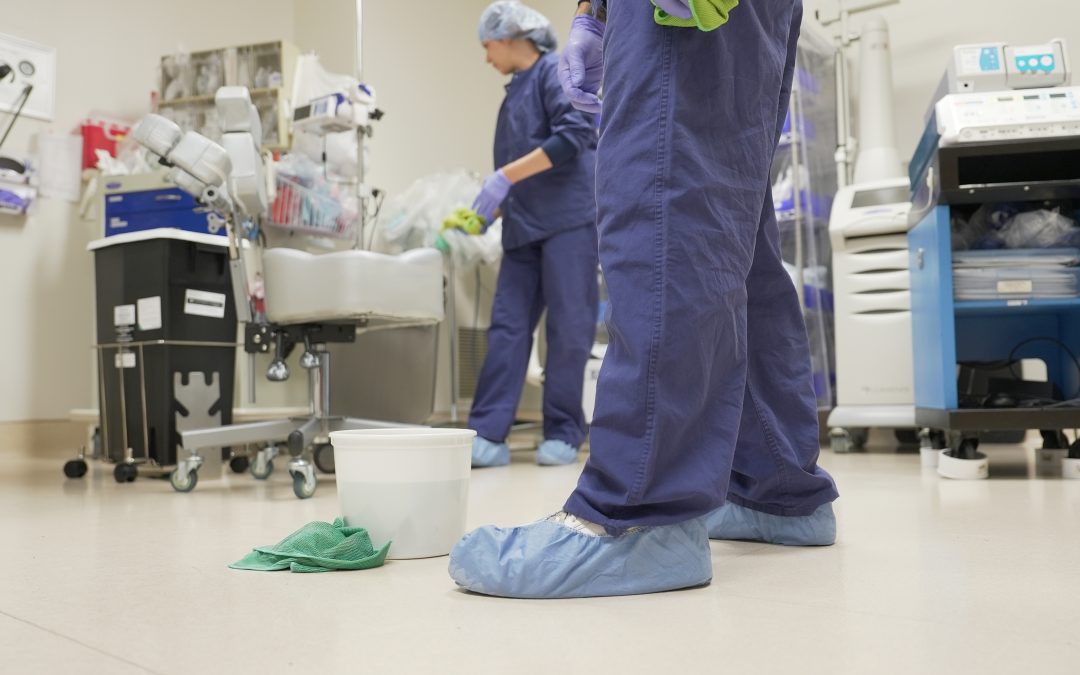
Cleanliness in a healthcare environment involves far more than maintaining a neat and professional appearance. Medical facilities experience steady patient traffic, repeated contact with shared surfaces, frequent room turnover, and situations involving people who may be ill, recovering, or especially vulnerable to infection.
These conditions create cleaning requirements that are different from those of a conventional office, retail store, or commercial building. Healthcare cleaning must account for patient care areas, high touch surfaces, cross contamination risks, approved disinfectants, potential exposure hazards, sensitive medical information, and clearly divided responsibilities between clinical and cleaning personnel.
Routine healthcare facility cleaning services and more comprehensive terminal cleaning services both play important roles in maintaining healthcare environments. Although they share some procedures, they are designed for different situations and should not be treated as interchangeable.
Cleanstart provides customized healthcare facility, medical office, and terminal cleaning services throughout the Greater Puget Sound area. Cleaning plans are developed based on facility type, patient volume, room use, hours of operation, approved products, scheduling needs, and established facility protocols.
Why Healthcare Facility Cleaning Is Different from Routine Janitorial Service
Routine janitorial services typically focus on maintaining an orderly, presentable, and functional workplace. Common tasks include emptying trash, dusting surfaces, vacuuming carpets, mopping floors, cleaning restrooms, and maintaining common areas.
These services remain important in healthcare buildings, but they do not address every consideration found in a medical environment.
Healthcare facility cleaning requires closer attention to frequently touched surfaces, including patient care, staff, and visitor areas. Cleaning personnel may also work near patient care areas, medical equipment, sharps containers, confidential records, isolation spaces, and materials that require special handling.
A professional healthcare cleaning program may need to address:
- High-touch surface cleaning and disinfection
- Room-specific cleaning procedures
- Cross-contamination prevention
- Facility-approved disinfectants
- Product dilution and contact times
- Personal protective equipment
- Bloodborne pathogen exposure procedures
- Sharps and regulated waste boundaries
- Patient privacy and building security
- Medical equipment responsibilities
- Cleaning verification and quality control
- Coordination with clinical and facility personnel
Healthcare environmental cleaning should follow a planned process based on the room type, the surfaces present, the level of contamination, and activities performed in the area. The required frequency and procedure can vary considerably from one part of a facility to another.
Healthcare cleaning simply a routine janitorial service performed more frequently. It’s a specialized environmental cleaning program built around the operations and risks of a medical facility.
What Is Routine Cleaning in a Healthcare Facility?
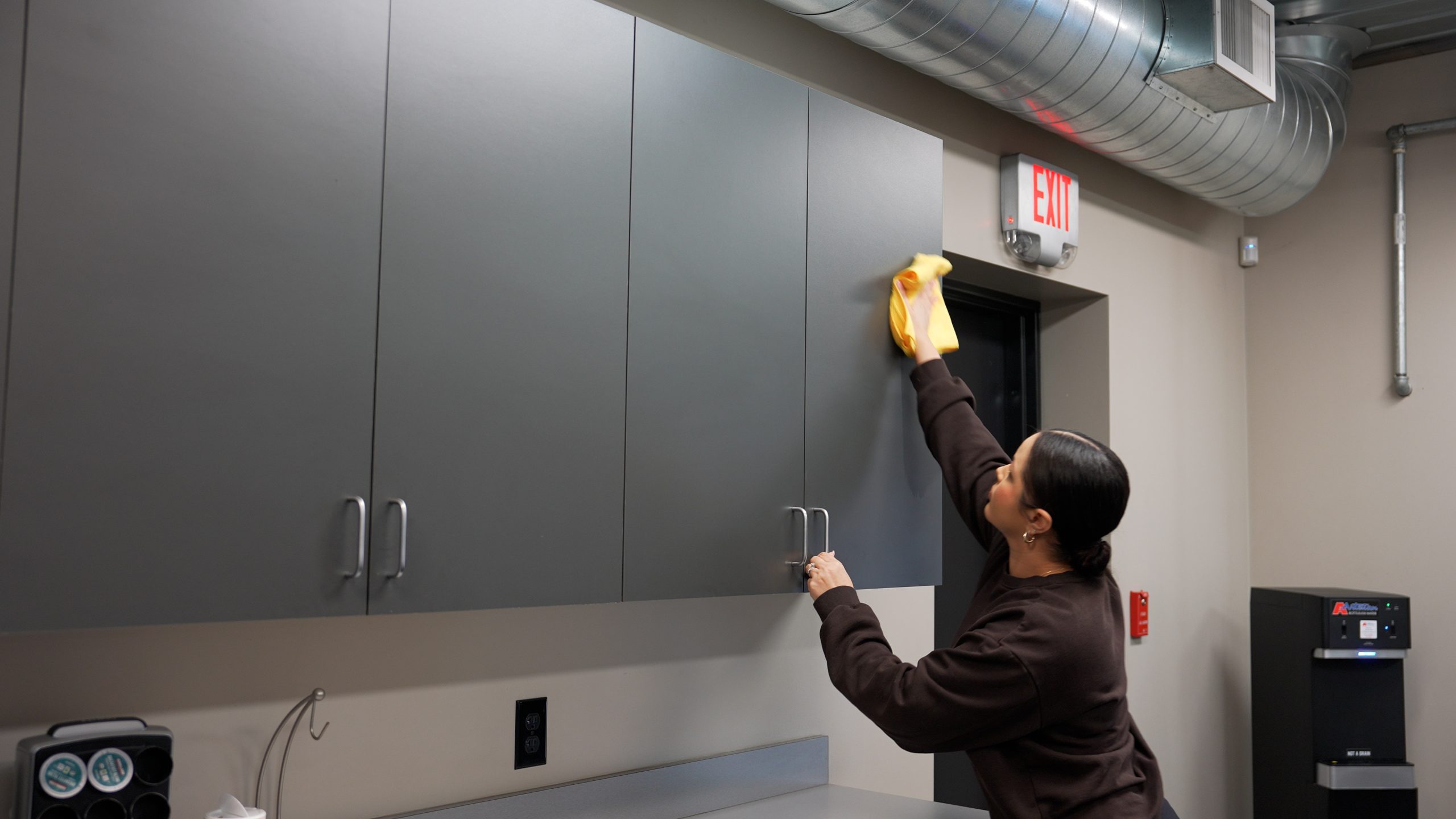
Routine healthcare cleaning refers to the scheduled cleaning and disinfection performed during normal facility operations.
Depending on the setting, routine cleaning may take place once each evening, several times throughout the day, between appointments, after specific procedures, or whenever visible contamination occurs. The purpose is to control soil, maintain sanitary conditions, support the facility’s infection prevention efforts, and keep patient and staff areas ready for continued use.
Routine healthcare facility cleaning may include:
- Cleaning and disinfecting high-touch surfaces
- Maintaining reception and check-in areas
- Cleaning waiting rooms and patient seating
- Servicing restrooms
- Removing ordinary waste
- Vacuuming, mopping, and maintaining floors
- Cleaning staff offices and breakrooms
- Maintaining entrances, hallways, and common areas
- Restocking approved paper and hygiene supplies
- Addressing spills within the cleaner’s authorized scope
- Cleaning exam room environmental surfaces as assigned
Routine cleaning is especially important in areas that are constantly in contact. Door handles, reception counters, chair arms, light switches, faucet handles, touchscreens, shared equipment, and restroom fixtures may be touched by many people within a relatively short period.
High-touch surfaces generally require more frequent attention than rarely handled surfaces. Cleaning frequency should reflect how heavily the area is used, how often the surface is touched, the type of care provided, and the facility’s established procedures.
The goal of routine healthcare cleaning is consistency. A facility may appear orderly while still having overlooked touchpoints, used disinfectants improperly, or had unclear responsibilities. A well-structured cleaning plan helps prevent these gaps.

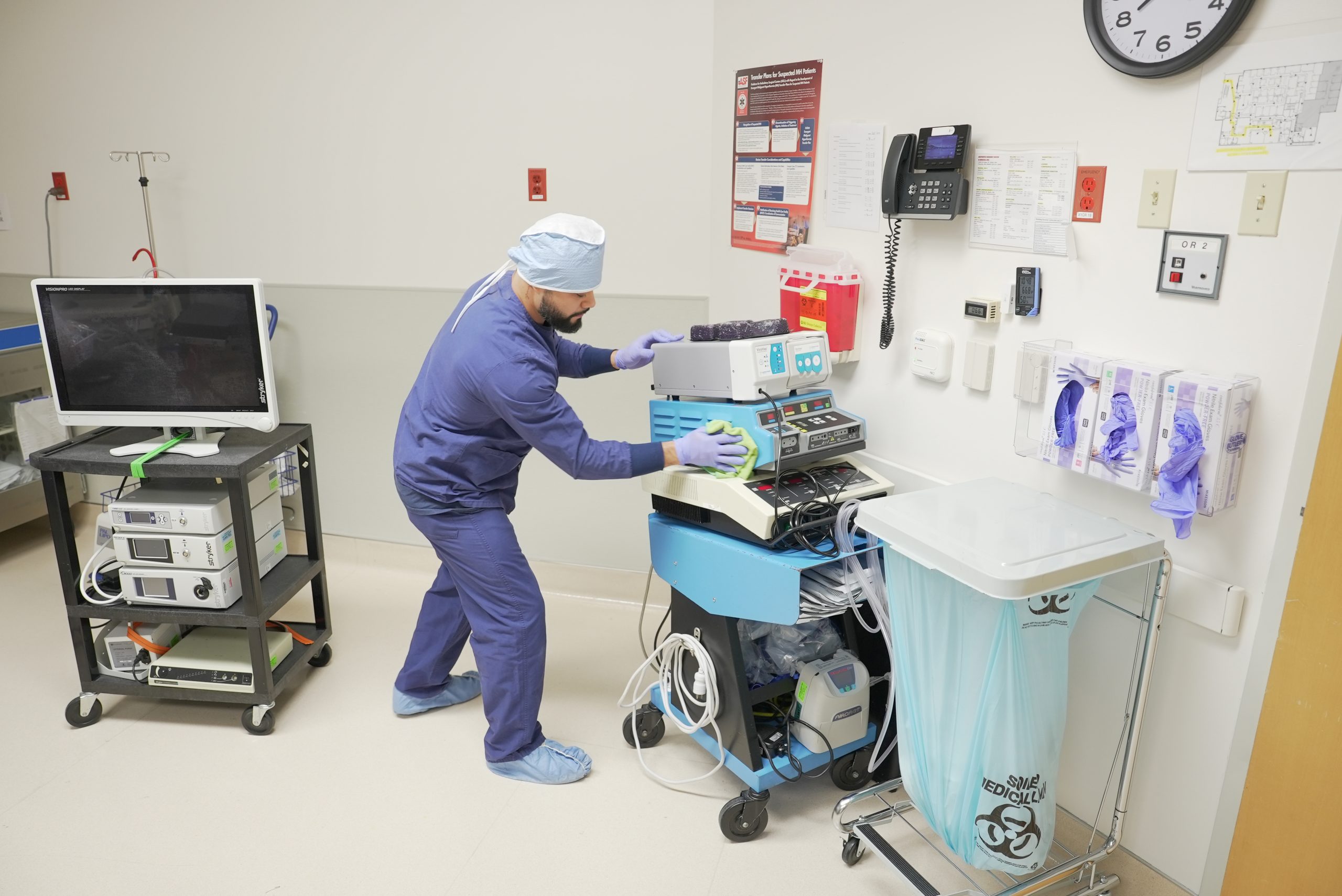
What Is Terminal Cleaning?
Terminal cleaning is a more comprehensive environmental cleaning and disinfection process typically performed after a patient is discharged or transferred from a room or treatment area.
It may also be required after isolation precautions, a known or suspected infectious exposure, certain procedures, significant contamination, an outbreak response, or another trigger established by the healthcare facility.
Unlike routine cleaning, which focuses on maintaining sanitary conditions during everyday operations, terminal cleaning is intended to prepare a defined space for its next approved use. The process is structured and protocol-driven. It does not depend only on whether the room looks clean.
Terminal cleaning may involve:
- Removing waste and soiled materials according to facility policy
- Cleaning visible soil and organic matter
- Cleaning and disinfecting patient contact surfaces
- Addressing both high-touch and low-touch surfaces
- Cleaning areas that were inaccessible while the room was occupied
- Cleaning approved furnishings, fixtures, and equipment
- Scrubbing and disinfecting handwashing sinks
- Cleaning and disinfecting the entire floor
- Replacing designated disposable material
- Documenting completion
- Completing an inspection or verification procedure
CDC healthcare cleaning guidance describes terminal or discharge cleaning as a comprehensive process that includes low-touch surfaces, high-touch surfaces, previously inaccessible areas, sinks, and the entire floor. Terminal cleaning is still environmental cleaning and disinfection.
It should not be confused with the sterilization of medical instruments, surgical devices, or specialized equipment.
What May Be Included in Terminal Cleaning Services?
The exact terminal cleaning checklist depends on the type of healthcare facility, the room involved, the patient’s precautions, the equipment present, and the organization’s infection prevention procedures. Cleanstart works from an agreed scope rather than assuming that the same procedure applies to every medical space.
Depending on the facility’s requirements, terminal cleaning services may include the following.
Preparation and Room Assessment
Cleaning personnel gather approved products, cloths, mop heads, personal protective equipment, waste supplies, and other necessary materials before beginning. The room should be reviewed for restricted equipment, sharps, waste, spills, or conditions that require clinical attention before cleaning can proceed.
Waste and Soiled Material Removal
Ordinary waste, disposable materials, and soiled items may be removed in accordance with the facility’s instructions. Regulated medical waste, sharps, contaminated linens, and other controlled materials should only be handled by personnel who are trained, authorized, equipped, and assigned to that responsibility.
Visible Soil Removal
Dust, debris, residue, spills, and organic material must be removed using the approved cleaning method. Visible contamination can interfere with disinfection, making cleaning an essential first step rather than an optional preparation.
High Touch Surface Cleaning and Disinfection
High-touch surfaces are areas that patients, healthcare staff, and visitors contact frequently throughout the day. These surfaces often require careful cleaning and disinfection using facility-approved products and procedures.
High-touch areas may include:
- Bed rails and bedframes
- Door handles
- Light switches
- Call controls
- Chair arms
- Tray tables
- Cabinet pulls
- Faucet handles
- Counters
- Grab bars
- Medical carts
- Shared controls
- Restroom fixtures
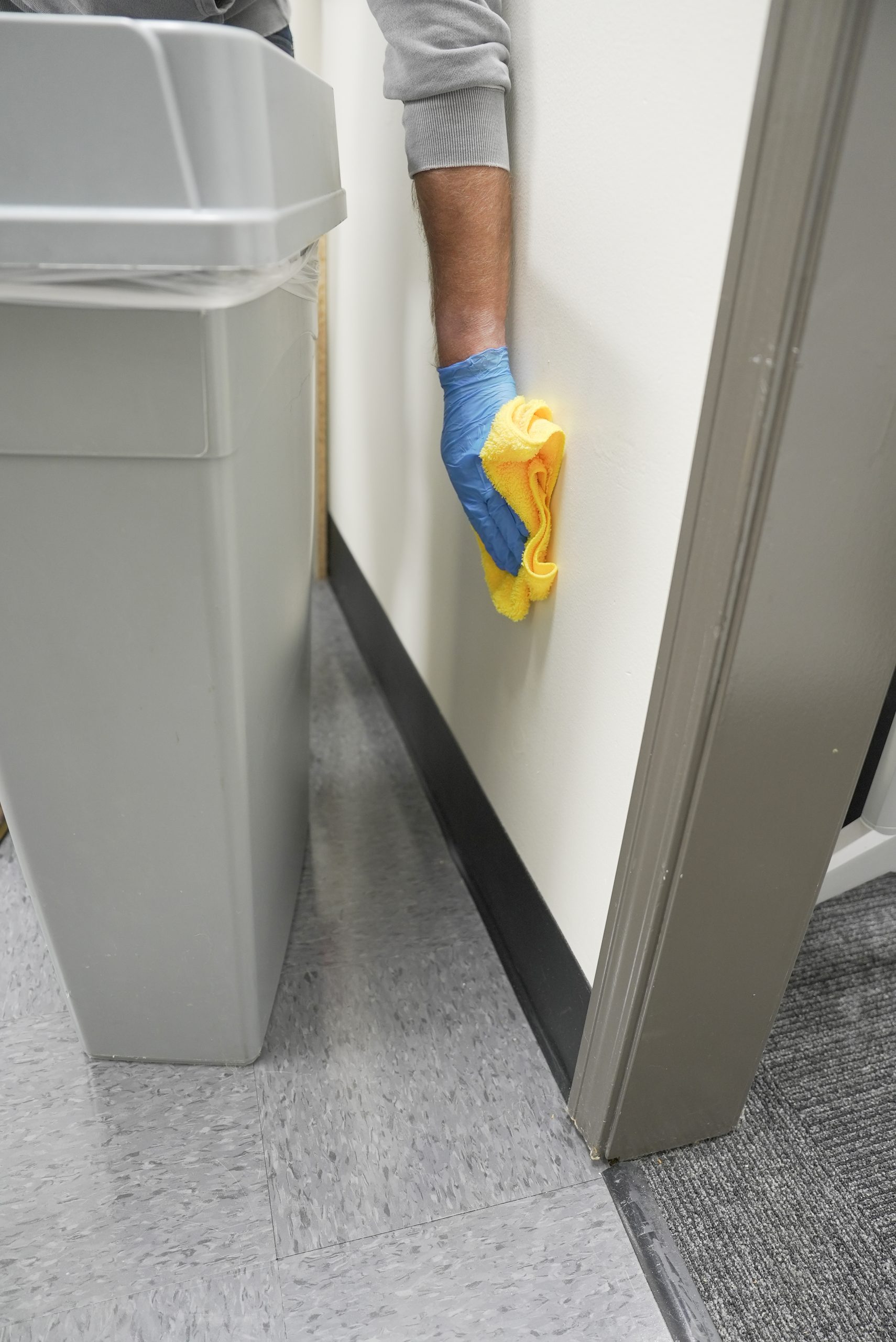
Low Touch Surface Cleaning and Disinfection
Low-touch surfaces are handled less frequently, but they can still collect dust, soil, droplets, and other contamination over time. These areas may receive less attention during routine daily cleaning but are typically addressed more thoroughly during terminal cleaning.
Low-touch surfaces may include:
- Walls and partitions
- Window ledges
- Upper shelves
- Tops of cabinets
- Window blinds
- Vents and grilles
- Baseboards
- Doorframes
- Corners and room edges
- Lower sections of furniture
- Surfaces behind or beneath approved movable furnishings
- Other areas that may have been inaccessible while the room was occupied
Including both high-touch and low-touch surfaces helps ensure terminal cleaning addresses the entire room rather than focusing only on the most visibly used areas.
Approved Furnishings and Equipment
Bedframes, mattresses, chairs, carts, tables, and other items may be included when they fall within the agreed environmental cleaning scope. Medical equipment should never be moved, dismantled, powered down, or treated with a cleaning product unless responsibility has been clearly assigned and the correct procedure is known.
Sinks and Restroom Areas
Handwashing sinks, faucets, counters, dispensers, toilets, grab bars, and other restroom fixtures may require detailed cleaning and disinfection. Patient areas should generally be completed before patient toilets to reduce the potential transfer of contamination from a more heavily contaminated area.
Complete Floor Cleaning
The entire floor is normally addressed near the end of the terminal cleaning sequence, including areas beneath approved movable furnishings when accessible.
Final Inspection and Documentation
Once the room is complete, the cleaning may be reviewed using a checklist, supervisor inspection, direct observation, marker system, or another method selected by the facility.
Where Terminal Cleaning May Be Needed
Terminal cleaning is commonly associated with inpatient rooms, but it can apply to a variety of healthcare environments.
Facilities may establish terminal cleaning procedures for:
- Patient rooms after discharge or transfer
- Isolation rooms
- Intensive care areas
- Emergency treatment rooms
- Surgical and ambulatory surgical spaces
- Procedure rooms
- Recovery areas
- Urgent care treatment rooms
- Outpatient care areas
- Rehabilitation rooms
- Behavioral health rooms
- Rooms affected by infectious exposure
- Spaces temporarily closed due to contamination
- Areas changing from one approved use to another
Not every healthcare facility has the same needs. A neighborhood doctor’s office, dental practice, imaging center, hospital, urgent care facility, and outpatient surgery center may all use different terminology, products, room classifications, cleaning frequencies, and terminal cleaning procedures.
The facility should determine when terminal cleaning is required and communicate the applicable protocol to the cleaning provider.
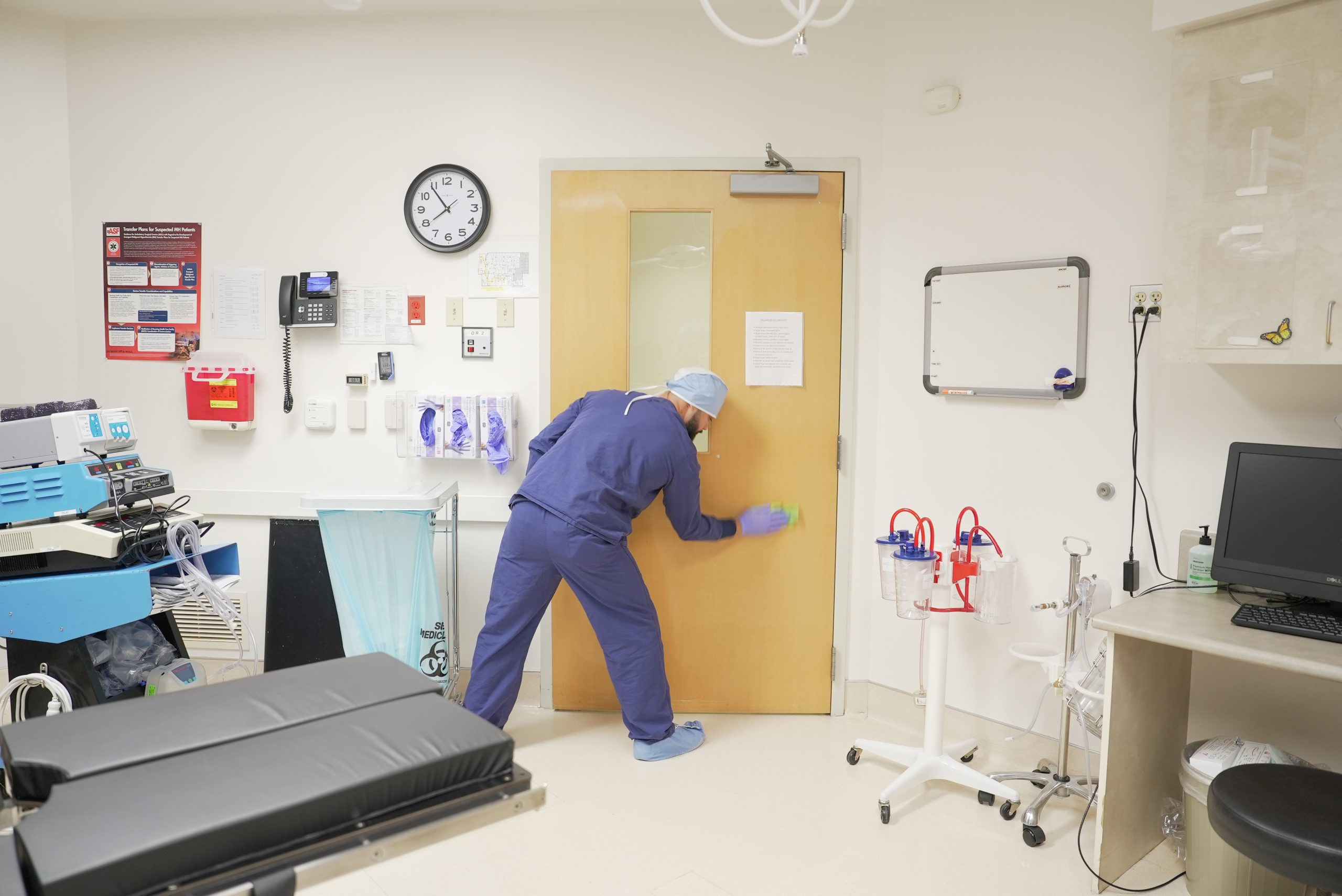
Why Terminal Cleaning Must Follow a Defined Sequence
Moving randomly through a patient room can result in missed surfaces and increase the risk of contaminant transfer between areas. A structured sequence helps cleaning personnel work methodically and maintain separation between cleaned and uncleaned areas.
A terminal cleaning sequence may include:
- Preparing supplies before entering
- Following the required PPE procedures
- Removing waste and soiled materials safely
- Addressing visible contamination
- Working systematically around the room
- Cleaning low-touch surfaces before high-touch surfaces
- Cleaning patient areas before patient toilets
- Cleaning higher surfaces before lower surfaces when appropriate
- Changing clothes and supplies at established intervals
- Keeping clean materials separate from used materials
- Completing the floor last
- Removing PPE and performing hand hygiene correctly
- Documenting the completed service
CDC guidance for terminal cleaning recommends working from low-touch surfaces to high-touch surfaces and completing patient areas before patient toilets. The precise order may vary according to the room, disinfectant, equipment, and facility protocol. What matters is that the process is defined, teachable, repeatable, and verifiable.

Cleaning Before Disinfecting
Cleaning and disinfecting are related but not identical. Cleaning physically removes dirt, dust, spills, residue, organic material, and other debris from a surface. This step reduces the amount of soil present and prepares the surface for disinfectant application.
Disinfecting involves applying an appropriate registered product to kill or inactivate specified microorganisms on a surface when the product is used according to its label. A disinfectant may not work as intended when soil or organic material remains on the surface.
Surfaces need to be cleaned before sanitizing or disinfecting because impurities can make it more difficult for those products to work effectively.
A basic cleaning and disinfection sequence may involve:
- Removing visible debris and soil
- Cleaning the surface using the approved method
- Applying the facility-approved disinfectant
- Wetting the full surface adequately
- Maintaining the required contact time
- Allowing the surface to dry or following label directions
- Repeating the process when contamination or product instructions require it
Some disinfectant labels allow one-step cleaning and disinfection under specified conditions. Others require a separate precleaning step, especially when visible soil is present. Cleaning personnel must follow the exact product label and facility procedure.
EPA Registered Disinfectants and Contact Time
Selecting an appropriate disinfectant is only part of the process. It must also be prepared, applied, and allowed to remain on the surface as directed. Important considerations include:
EPA Registration
Surface disinfectants used in healthcare settings should be properly registered and selected based on the facility’s needs, target organism claims, and surface types.
A product that is effective against one organism should not automatically be assumed effective against every other organism.
Product Label Directions
The label establishes how the product may be used, including:
- Approved surfaces
- Dilution instructions
- Application methods
- Precleaning requirements
- Contact time
- Required PPE
- Ventilation requirements
- Storage and disposal directions
Contact or Dwell Time
Contact time is the length of time the treated surface must remain wet for the disinfectant to achieve the applicable label claim. When a product requires a specified contact time, the surface should remain visibly wet for that full period.
An additional product may be needed if the surface dries too soon. Spraying disinfectant and immediately wiping it away may not satisfy the label requirements.
Surface Compatibility
Some products can discolor fabrics, cloud plastics, damage finishes, corrode metals, or harm electronic components. Healthcare facilities should confirm that approved disinfectants are compatible with the surfaces and equipment being treated.
Safe Chemical Use
Cleaning products should never be mixed unless the manufacturer specifically instructs users to do so. Incompatible chemicals can create harmful fumes or other hazards. Automated dilution systems and clearly labeled containers can help reduce errors when using concentrated products.
Preventing Cross-Contamination
Cleaning tools and procedures can spread contaminants if not properly managed. For example, using the same cloth in a patient restroom and a reception area can transfer material rather than removing it. Reusing a heavily soiled mop head across multiple rooms may create a similar problem.
Cross-contamination controls may include:
- Color-coded microfiber cloths
- Separate the restroom and patient area tools
- Dedicated equipment for isolation rooms when required
- Changing clothes between rooms or designated zones
- Changing mop heads at established intervals
- Avoiding repeated dipping of used cloths into a clean solution
- Following a consistent room sequence
- Keeping clean and soiled supplies separate
- Removing gloves without contaminating hands
- Performing hand hygiene as required
- Cleaning and disinfecting reusable equipment between assignments
- Maintaining an organized cleaning cart
Cleaning personnel should also avoid setting supplies on contaminated surfaces or returning potentially contaminated materials to clean storage. A thoughtfully designed workflow supports consistency and helps workers understand when tools, gloves, cloths, and solutions must be replaced.
Cleaning Around Blood, Bodily Fluids, Sharps, and Regulated Waste
Healthcare cleaning may involve hazards not typically present in a conventional office environment. Blood, bodily fluids, contaminated sharps, and regulated medical waste require specific procedures, training, protective equipment, and clearly assigned responsibilities.
OSHA’s Bloodborne Pathogens Standard addresses occupational exposure to blood and other potentially infectious materials. Its requirements can involve exposure control plans, work practices, protective equipment, housekeeping, sharps disposal, and regulated waste procedures.
Cleaning personnel should never:
- Reach unquestioningly into a waste container
- Press down a trash bag by hand
- Pick up an exposed needle casually
- Attempt to recap a used sharp
- Handle a leaking red bag without authorization
- Clean an unknown spill without following the exposure control procedure
- Assume all waste can be treated as ordinary trash
Contaminated sharps should be placed in appropriate puncture-resistant, closable, leak-resistant, and properly labeled containers.
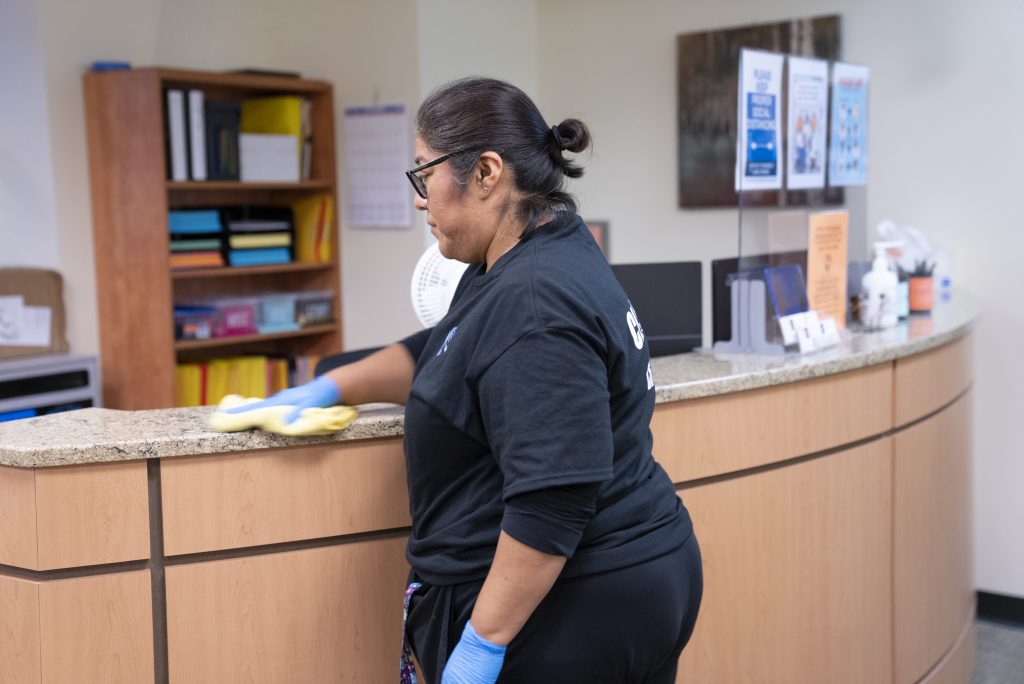
Healthcare Facilities That May Need Professional Cleaning
Cleanstart can develop healthcare cleaning programs for a variety of medical and healthcare-related environments. These may include:
- Medical offices
- Physician practices
- Dental offices
- Urgent care centers
- Outpatient clinics
- Diagnostic and imaging centers
- Physical therapy facilities
- Rehabilitation centers
- Behavioral health practices
- Specialty medical offices
- Ambulatory facilities
- Healthcare administrative offices
- Medical laboratories
- Senior care and healthcare-related properties
- Multi-tenant medical buildings
- Hospitals and patient care facilities, when the requested scope aligns with Cleanstart’s capabilities
Each facility requires an individualized approach. A dental practice may need clearly divided responsibilities for treatment rooms and sterilization areas. A rehabilitation center may have shared exercise equipment and open treatment spaces. An urgent care center may experience unpredictable patient volume and frequent room turnover.
The cleaning program should reflect what actually happens inside the facility.
Developing a Facility-Specific Healthcare Cleaning Plan
A healthcare cleaning proposal should not be based solely on square footage.
Before creating a program, Cleanstart may evaluate:
- The type of healthcare facility
- Services performed within the building
- Number and type of treatment rooms
- Patient volume
- Operating hours
- Room turnover
- High-touch surfaces
- Terminal cleaning triggers
- Approved disinfectants
- Flooring and furnishing materials
- Medical equipment boundaries
- Sharps and waste responsibilities
- Blood and bodily fluid procedures
- Required personal protective equipment
- Daytime and after-hours needs
- Privacy and security expectations
- Storage and supply requirements
- Inspection and documentation needs
A detailed scope helps prevent duplicated responsibilities, overlooked surfaces, safety concerns, and misunderstandings between the healthcare provider and cleaning team.
Healthcare Facility Cleaning Across the Greater Puget Sound Area
The Greater Puget Sound region supports a broad and growing healthcare network that includes major medical centers, suburban healthcare campuses, neighborhood physician practices, urgent care clinics, dental offices, imaging facilities, rehabilitation centers, senior care properties, and specialized treatment providers.
Cleanstart provides healthcare facility cleaning services throughout the Greater Puget Sound area, including Seattle and communities across South and East King County, Pierce County, Thurston County, and surrounding service areas. Healthcare properties throughout the region operate in very different environments.
A high-volume urban clinic may share elevators, garages, entrances, and common areas with other tenants. A suburban medical building may contain several independent practices with different hours and cleaning responsibilities. A rehabilitation facility may have open treatment areas and shared equipment, while a specialty practice may require careful scheduling around procedures.
Puget Sound facilities must also account for wet weather, tracked-in soil, moisture at entrances, seasonal illness, commuter traffic, and busy public-facing spaces. Cleanstart considers these local operating conditions when developing routine and terminal healthcare cleaning plans.
Why Healthcare Facilities Choose Cleanstart
Cleanstart brings more than 25 years of commercial cleaning experience to healthcare and medical environments throughout the Greater Puget Sound area. Rather than applying one generic checklist to every building, Cleanstart works with facility managers, practice administrators, property managers, and healthcare teams to create a clearly defined cleaning program.
Depending on the facility, Cleanstart’s professional healthcare cleaning services may include:
- Routine healthcare facility cleaning
- Terminal cleaning services
- Reception and waiting room cleaning
- High-touch surface cleaning and disinfection
- Restroom cleaning
- Administrative office cleaning
- Floor and carpet care
- Daytime cleaning support
- After-hours cleaning
- Periodic detailed cleaning
- Customized quality control procedures
Our team can adapt service schedules and cleaning priorities when patient volume, operating hours, room use, or facility requirements change. At Cleanstart, our goal is to provide dependable environmental cleaning and disinfection that supports the facility’s established protocols, daily operations, professional appearance, and commitment to patient care.
Build a More Effective Healthcare Cleaning Program
outine healthcare facility cleaning and terminal cleaning serve different but equally important purposes. Routine cleaning supports sanitary conditions throughout everyday operations by maintaining high-touch surfaces, patient areas, restrooms, floors, offices, and common spaces.
Terminal cleaning provides a more comprehensive process after discharge, transfer, isolation use, infectious exposure, or another facility-defined trigger. It extends beyond routine touchpoints to include low-touch surfaces, hidden areas, fixtures, furnishings, sinks, and the entire floor.
Neither service should be guided solely by appearance. An effective healthcare cleaning program requires appropriate products, correct contact times, organized cleaning sequences, cross-contamination controls, trained personnel, clear medical equipment boundaries, defined waste procedures, and consistent quality verification.
Cleanstart provides customized healthcare facility, medical office, and terminal cleaning services throughout Seattle and the Greater Puget Sound area.
Contact us today to discuss your healthcare property and create a cleaning program tailored to your facility’s rooms, schedule, patient activity, and established environmental cleaning requirements.
Frequently Asked Questions About Healthcare Facility and Terminal Cleaning Services
What is healthcare facility cleaning?
Healthcare facility cleaning is a specialized form of commercial cleaning designed for medical offices, clinics, treatment centers, rehabilitation facilities, and other healthcare environments. It includes routine cleaning, high-touch surface disinfection, restroom sanitation, floor care, waste removal, and procedures intended to reduce cross-contamination.
How is healthcare facility cleaning different from routine janitorial service?
Routine janitorial service primarily focuses on appearance, general cleanliness, waste removal, restroom care, and floor maintenance. Healthcare facility cleaning includes these services but requires greater attention to patient-care areas, approved disinfectants, contact times, cross-contamination prevention, personal protective equipment, medical waste boundaries, and facility-specific cleaning procedures.
What is terminal cleaning?
Terminal cleaning is a detailed environmental cleaning and disinfection process typically performed after a patient is discharged or transferred, following isolation use, after infectious exposure, or when required by a healthcare facility’s established protocols. It addresses high-touch surfaces, low-touch surfaces, previously inaccessible areas, fixtures, furnishings, sinks, and the entire floor.
What is the difference between routine cleaning and terminal cleaning?
Routine healthcare cleaning is performed during normal operations to maintain sanitary conditions in patient areas, restrooms, offices, waiting rooms, and common spaces. Terminal cleaning is a more comprehensive room-wide process completed after a defined event, such as discharge, transfer, isolation use, or infectious exposure.
What surfaces are included in terminal cleaning services?
Terminal cleaning may include bedframes, door handles, switches, call controls, counters, cabinets, tray tables, sinks, restroom fixtures, walls, ledges, vents, baseboards, furnishings, and the entire floor. The exact scope depends on the room type and the healthcare facility’s cleaning protocol.
Why are low-touch surfaces included in terminal cleaning?
Low-touch surfaces such as walls, ledges, upper shelves, vents, blinds, and baseboards may accumulate dust, residue, droplets, and other contaminants over time. Although these surfaces may not require the same daily attention as frequently touched areas, they are often included in terminal cleaning to ensure a more complete room-wide cleaning.
Does terminal cleaning sterilize a healthcare room?
No. Terminal cleaning involves thorough environmental cleaning and disinfection, but it does not sterilize an entire room. Sterilization is a specialized process used primarily for medical instruments and other clinical equipment.
Are healthcare surfaces cleaned before disinfection?
In many situations, yes. Visible dirt, residue, and organic material can interfere with a disinfectant’s effectiveness. Surfaces may need to be cleaned first and then treated with a facility-approved disinfectant according to the product label.
What is disinfectant contact time?
Contact time, also called dwell time, is the amount of time a surface must remain visibly wet with disinfectant for the product to achieve its stated claim. The required contact time varies by product and must be followed as directed on the label.
Does Cleanstart provide medical office cleaning services?
Yes. Cleanstart provides customized medical office cleaning services for physician practices, dental offices, outpatient clinics, urgent care centers, rehabilitation facilities, diagnostic centers, specialty practices, and other healthcare-related properties.
Can Cleanstart provide daytime and after-hours healthcare cleaning?
Yes. Cleaning schedules can be customized to align with patient appointments, operating hours, building access, room availability, and facility needs. Services may include daytime cleaning support, after-hours cleaning, routine scheduled service, and terminal cleaning when appropriate.
Does Cleanstart handle sharps and regulated medical waste?
Responsibilities for sharps, blood, bodily fluids, and regulated medical waste must be clearly defined before service begins. These materials should only be handled by personnel who are properly trained, equipped, authorized, and assigned to perform the work.
Does Cleanstart provide healthcare terminal cleaning services?
Cleanstart can provide terminal cleaning services when the requested work aligns with its capabilities and the healthcare facility supplies a clearly defined protocol, approved products, room requirements, and division of responsibilities.
What types of healthcare facilities does Cleanstart clean?
Cleanstart can create cleaning programs for medical offices, physician practices, dental offices, urgent care centers, outpatient clinics, diagnostic and imaging facilities, rehabilitation centers, behavioral health practices, healthcare administrative offices, senior care properties, medical buildings, and other healthcare facilities.
What areas does Cleanstart serve?
Cleanstart provides healthcare facility cleaning and medical office cleaning services throughout the Greater Puget Sound area, including Seattle and communities across South and East King County, Pierce County, Thurston County, and surrounding areas.